EL PAÍS
- 3.5
- Rating
- 1.00M
- Installs
- Free
- Price

 Analysis by App-foxy
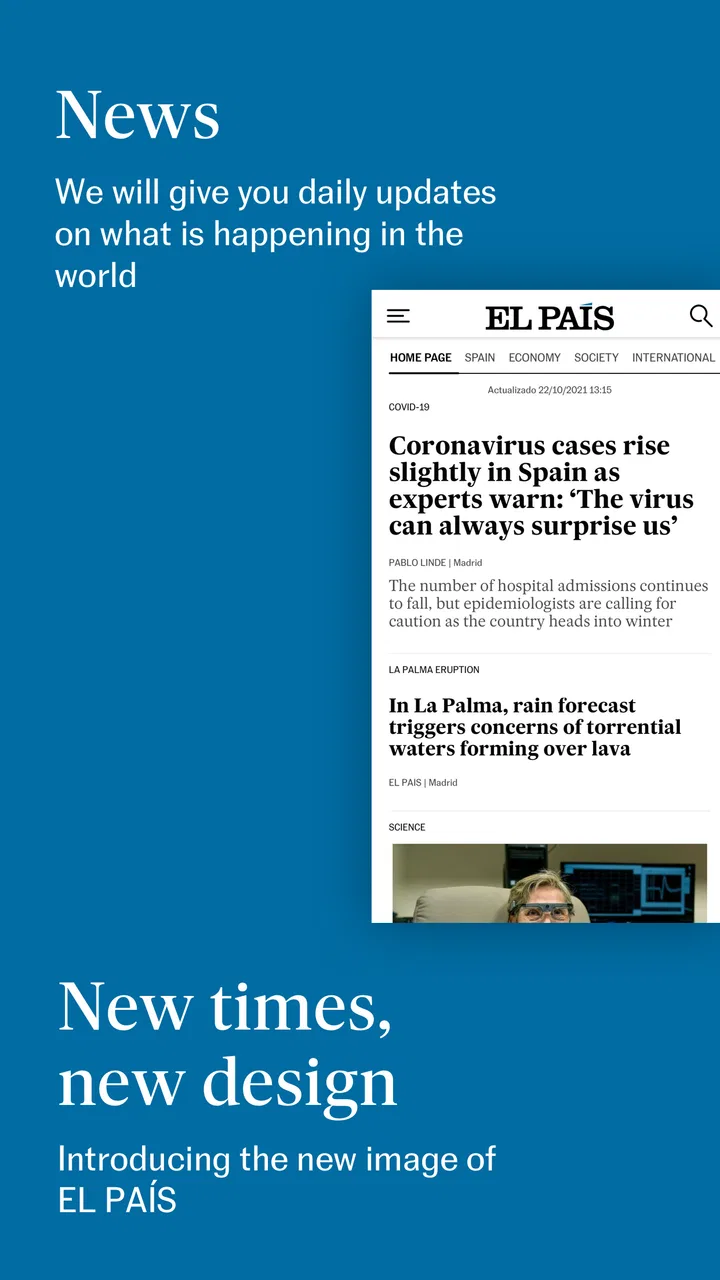
I spent time with EL PAÍS as a daily news app, using it less like a quick headline widget and more like a regular reading destination. Its main appeal is straightforward: it puts the journalism of EL PAÍS into a mobile format that is easy to browse, with a layout designed for moving from one story to the next without much effort. That sounds simple, but it matters when I want to catch up during a short break rather than open a browser, search for the publication, and work through several pages.
This is a free app in the News & Magazines category, developed by EL PAÍS. It is aimed at a general audience and carries an Everyone 10+ content rating. The app has passed one million installs and holds an average rating of 3.6 from roughly fourteen thousand ratings, so the overall picture is mixed rather than universally enthusiastic. That matches my impression: the reading experience can be convenient and polished, but the value depends heavily on how often you read this particular publication and how comfortable you are with its access model.
How I use EL PAÍS during an ordinary day
My basic routine starts with the main feed instead of trying to read everything. I scan the visible headlines, stop at stories that connect to something I already care about, and open those in full. This approach works well because the app reduces the friction between seeing a headline and beginning the article. I do not have to decide which browser tab to keep open or deal with a page that feels designed primarily for a desktop screen.
You May Also Like

 Blood Strike: 2.5 Anniversary
Blood Strike’s Loadouts Turn Every Drop Into a Tactical Gamble
A close look at Blood Strike’s custom loadouts: how fast access to signature weapons reshapes its battle royale rhythm, rewards preparation, and narrows the gap between fights.

 Pandora - Music & Podcasts
Pandora’s Music Is Easy to Start, but Harder to Recover
Pandora’s strength is its low-effort path from a seed to a station. Its weak spot is how much confidence it asks you to place in connection, setup, and quiet recovery.

 8 Ball Pool
 Is Built on Rivalries, Rematches, and Routine
A close look at the rivalries, rematches, shared routines, and unanswered safety questions that turn a quick pool match into a persistent mobile community.

 Samsung Music
’s Quiet Strength Is Playing What You Already Own
Its reach comes less from spectacle than from dependable access to a personal library. That simplicity is both the app’s strongest retention engine and its ceiling.

 AccuWeather: Weather Radar
AccuWeather Review: A Quick, Clear Forecast for Everyday Decisions
For everyday plans, the best forecast is the one you can understand quickly. AccuWeather makes rain timing, radar, and local conditions easy to act on, with a few trade-offs.

 Hill Climb Racing
Why Hill Climb Racing Still Turns Crashes Into One More Run
A tiny car, a bumpy hill and one more upgrade: Hill Climb Racing keeps resurfacing because its simple chaos makes every near-miss feel personal.
More From Our News Desk



For example, imagine checking the news while waiting for a train. I can use that short window to scan the latest coverage, open one substantial article, and leave when my journey begins. Later, I can return for a deeper read. The app is most useful in this kind of repeated, lightweight habit: a few minutes in the morning, another look around lunch, and a longer session in the evening when a topic deserves attention.
I would not describe it as a replacement for every news source. It is specifically useful if EL PAÍS is already one of the publications you trust or want to follow. Readers looking for a broad, publication-neutral news aggregator may find the experience too focused. In contrast, someone who wants a direct mobile window into this newspaper will understand the app quickly.
The current version is 12.3.0, and the application requires Android 8.0 or later. That makes it accessible on many older Android phones, although the practical experience still depends on the screen, speed, and software condition of the device. On a small or slow phone, reading long articles is naturally less comfortable than it is on a recent handset with a larger display.
Building a dependable reading routine
The most useful habit I found was separating scanning from reading. I do not open every item that looks interesting. Instead, I use the first pass to identify the stories that deserve time, then return to those articles when I can concentrate. This prevents the app from becoming an endless stream of half-read pages and makes it easier to remember what I actually learned.
That workflow is also helpful for people who read news in several languages or across several publications. I can use EL PAÍS for its own editorial perspective, then compare a major story with another source when the subject is especially important. The app works best as one deliberate part of a news routine, not as a promise that one publication will cover every angle equally.
Another practical choice is to read complete articles when possible rather than relying only on headlines. Headlines are useful for orientation, but they can flatten context. When I have enough time, the app’s article view gives me a more focused environment than a busy browser session filled with unrelated tabs and notifications.
What I would check before making it my main news app
The first thing I would consider is whether I genuinely want EL PAÍS content often enough to justify keeping a dedicated publication app. If I only read it once every few weeks, a browser may be sufficient. If I check it regularly, the app becomes more convenient because it gives that publication a permanent place in my daily routine.
I would also pay attention to how access works in my own reading pattern. The app is free to install, but in-app purchases range from $0.99 to $219.99 per item. That does not automatically make it poor value, but it does mean I would review any subscription or purchase screen carefully before confirming anything. A free download should not be confused with unlimited access to every possible part of a newspaper service.
My advice is to decide what you expect before installing it. If you want occasional headline browsing, the free starting point may be enough for your needs. If you want sustained access to a complete publication, investigate the available purchase choices inside the app and compare them with your reading frequency. The right decision depends on whether you will use the service consistently, not simply on the fact that the initial download costs nothing.
Settings, shortcuts, and faster reading patterns
I’d use this section to make the daily routine feel less effortful: start by deciding when you want news to reach you, then tune phone-level alerts and display settings to match. I also find it helps to open the feed with a question in mind—what changed, and what deserves a closer read? That small pause can keep a quick check from turning into aimless scrolling.
Settings worth checking first
When I install a news app, I do not immediately allow every prompt or assume the default setup is ideal. I first look through the available app and device settings, especially anything related to notifications, data use, and reading comfort. The exact options can vary by phone and app version, so I avoid assuming that every device presents the same controls. The important point is to shape the app around my routine rather than let it interrupt me all day.
Notifications deserve particular attention. News alerts can be useful when I want immediate awareness of major developments, but constant interruptions make it harder to read thoughtfully. I prefer a quieter setup unless I have a specific reason to receive alerts. If the phone offers separate notification controls for the app, I use those to reduce distractions while preserving the ability to check the feed manually.
I also check the Android battery and mobile-data settings when I am trying to keep a phone efficient. News apps are usually opened frequently, and repeated browsing can add up over time. I do not treat this as a unique flaw of EL PAÍS; it is simply a sensible check for any app that becomes part of a daily habit. If data is limited, I avoid casually loading article after article while away from Wi-Fi.
Reading comfort is equally important. I adjust the phone’s display brightness and text settings to suit the time of day, particularly for long articles. A news app can have a clean interface and still feel tiring if the text is too small or the screen is too bright. I find that small changes to the phone’s display make a greater difference than repeatedly switching between apps during a reading session.
Three habits that make the app more useful
My first useful habit is a two-pass scan: I skim the feed once, open only the strongest candidates, and then read those articles without jumping back after every paragraph. This is more efficient than treating every headline as an urgent assignment. It also makes the app feel calmer, especially on busy days.
The second is topic comparison. When a story affects a decision I need to make, I read the EL PAÍS article for its reporting and then consult another source for contrast. This is where a dedicated newspaper app differs from a general aggregator: it gives me a clear editorial viewpoint, but I remain responsible for checking whether that viewpoint is enough for the question in front of me.
The third is using time blocks rather than constant checking. I open the app at planned moments instead of reacting to every possible update. A short morning scan can establish the day’s main themes, while a longer evening session is better for analysis. This pattern reduces the temptation to consume fragments of news whenever I feel bored and gives longer articles a fair chance.
These are not secret functions hidden behind a special mode. They are repeatable ways of using the app that help me get more from its simple purpose. The advantage comes from consistency: deciding when to browse, what to open, and when another source is necessary.
Where it is faster than a browser
The app’s strongest practical advantage is focus. A browser is more flexible, but that flexibility can become clutter. I may start with one article and end up with unrelated tabs, pop-ups, or a search session that has drifted away from the original subject. EL PAÍS gives me a more direct route into the publication, which is valuable when I want to read rather than investigate the whole web.
It is also easier to make the app part of a repeated routine. A dedicated icon on my home screen acts as a reminder to check the publication intentionally. That small piece of friction reduction is easy to overlook, but it is one reason I prefer apps for services I use often.
The browser still wins when I need to compare multiple publications quickly, search broadly, or avoid adding another app to my phone. It is also the better choice for a reader who does not want to think about in-app purchase options or publication-specific access. The app is faster for focused reading; the browser is more flexible for open-ended research.
Limits that experienced users should understand
The average rating of 3.6 suggests that convenience does not remove every source of frustration. In my view, the biggest potential issue is expectation management. A reader may install a free app expecting the entire newspaper experience to be available without further decisions, then feel disappointed when some access may be connected to in-app purchases. I would approach the app as a free entry point into EL PAÍS, not as a guarantee that every article or service is permanently unrestricted.
The purchase range is broad, from $0.99 up to $219.99 per item, so I would slow down at checkout and read the wording carefully. I would also check the account and subscription details shown on the purchase screen before accepting anything. This is especially important if several people use the same device or if a child has access to the phone, even though the content rating is Everyone 10+.
Another limitation is editorial scope. EL PAÍS can be a strong choice for readers who specifically want its coverage, but it is not a neutral dashboard of every newspaper. If my goal is to compare breaking coverage from many outlets in one place, a news aggregator or a browser-based workflow may be better. If I want local reporting from a different region, I would choose a publication that is closer to that need rather than expecting this app to fill every gap.
I would also skip it if I dislike reading long-form news on a phone. The app can make access easier, but it cannot change the physical limits of a small screen. Someone who prefers printed pages, a tablet, or a desktop monitor may find those formats more comfortable for extended reading. The app is convenient, not magical.
Who should install it
I would recommend it to regular EL PAÍS readers, people who want a focused newspaper app instead of a crowded aggregator, and anyone building a measured daily news habit. It is particularly suitable for readers who value a direct route to one publication and are willing to compare sources when a subject calls for broader context.
I would be more cautious about recommending it to someone who wants only free, unlimited access, a highly personalized multi-source feed, or a very lightweight app used once in a while. Those readers may be happier with a browser bookmark, a general news reader, or the websites and apps of several publications they already follow.
My final assessment after settling into the workflow
EL PAÍS succeeds when I use it for what it is: a dedicated mobile reading space for one established newspaper. Its easy browsing makes regular check-ins pleasant, and the app fits naturally into short sessions as well as more focused reading. The one-million-plus install figure shows that it has a substantial audience, but popularity alone does not decide whether it belongs on your phone.
My recommendation comes with a clear condition: install it if EL PAÍS is already relevant to your news routine, then take a moment to adjust notifications and understand the purchase choices before settling into daily use. I would not choose it as my only source for every subject, and I would not install it simply because it is free. The best reason to keep it is focused access to the publication you actually want to read.
For me, that makes it a useful, credible news companion rather than an all-purpose news solution. The experience is strongest when paired with deliberate habits: scan first, read selectively, compare important stories, and avoid letting alerts dictate the day. Used that way, EL PAÍS offers a practical balance between convenience and editorial focus, while its access model and single-publication scope remain important trade-offs.
FAQs for EL PAÍS
01What is EL PAÍS app and what features does it offer?
EL PAÍS app is the mobile version of the renowned Spanish newspaper, providing users with access to the latest news and updates from Spain and around the world. The app features articles across various categories such as politics, economy, culture, and sports. It also offers multimedia content, opinion pieces, and customizable notifications to keep users informed.
02Is the EL PAÍS app free to use, or are there any subscription costs?
The EL PAÍS app is free to download and provides access to a selection of articles at no cost. However, to unlock full access to all content, including premium articles and exclusive reports, users may need to subscribe to a paid plan. Subscription details and pricing can usually be found within the app or on the official website.
03How frequently is the content updated on the EL PAÍS app?
Content on the EL PAÍS app is updated in real-time, ensuring users have access to the most current news and stories as they happen. Breaking news alerts and regular updates across various sections keep the app lively and informative, making it a reliable source for staying informed about global and local events.
04Can I customize the notifications I receive from the EL PAÍS app?
Yes, the EL PAÍS app allows users to customize notifications to suit their preferences. Users can choose to receive alerts for specific topics, categories, or breaking news. This feature ensures that users only receive updates that are relevant and important to them, enhancing their overall experience with the app.
05Is the EL PAÍS app available in languages other than Spanish?
The primary language of the EL PAÍS app is Spanish, reflecting its roots as a major Spanish newspaper. However, the app may offer content in other languages or provide translation features for select articles. Users interested in multilingual options should check the app settings or official communications for updates on language support.
Pros
- Comprehensive news coverage.
- User-friendly interface.
- Regular updates and alerts.
- In-depth analysis sections.
- Available in multiple languages.
Cons
- Contains ads in free version.
- Requires internet connection.
- Limited offline content access.
- Occasional notification overload.
- Subscription needed for premium content.

EL PAÍS
Gallery